
Fac Potiones Excellens
Tipples → Alcoholic Beverage Products → Distillates → Spirits → Direct Spirits → Whiskies → Rye Whiskies → Pennsylvania-style Rye Whiskies
Monongahela (style) Rye Whiskey
Jump to: Description | Mash Bills | Bottlings | Tasting and Usage Notes | Noteworthy Drinks | History
Description

Monongahela-style Rye Whiskey is distilled from an all-rye mash, but traditionally with at least 10% of it being malted rye. The above image shows a typical proportion of 20% malted rye with 80% un-malted rye. Also shown is the three-chamber still that made all-rye whiskey distillation less difficult in the Monongahela region around the year 1830.
Mash Bills
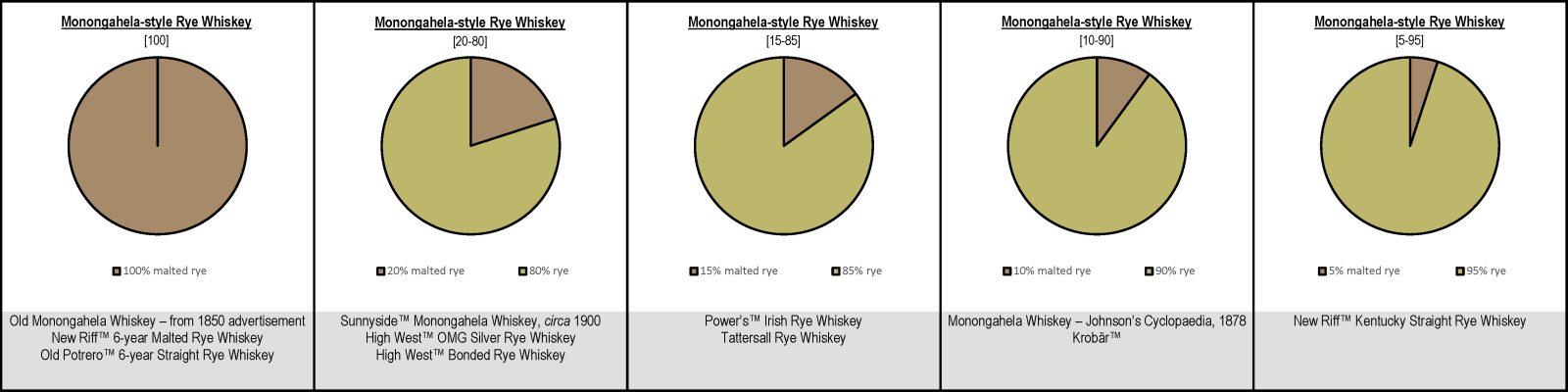
The 5-95 mash bill shown all the way to the right in the above image almost does not belong here. One could argue that it has more in common with a supermajority rye whiskey than old-fashioned Monongahela whiskey - down to the suspected use of amylase. Malted rye is just so unheard of in modern, cheap-to-produce, supermajority rye production that it would seem even more out of place there.
Bottlings


Tasting and Usage Notes
Noteworthy Drinks
History
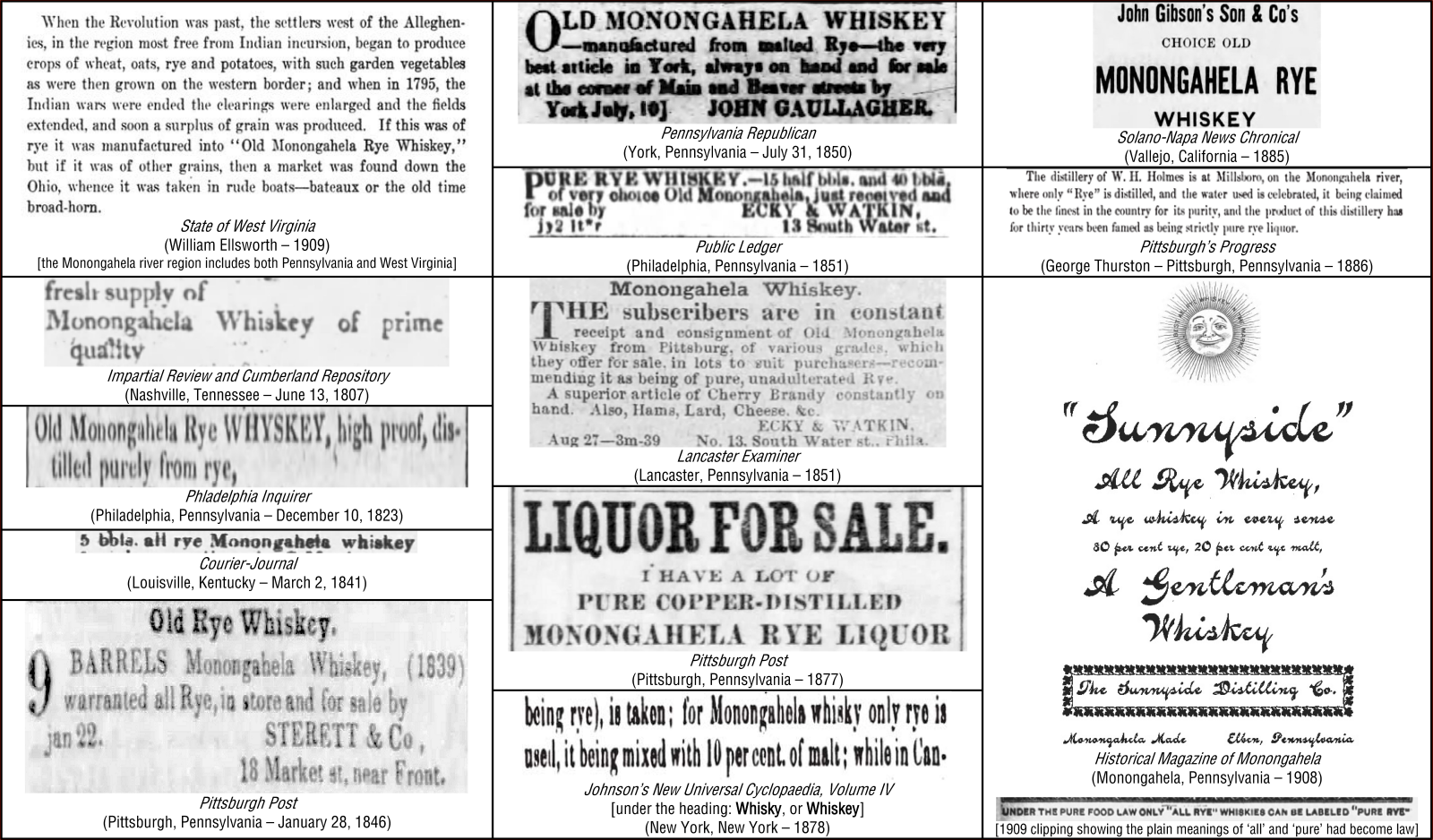
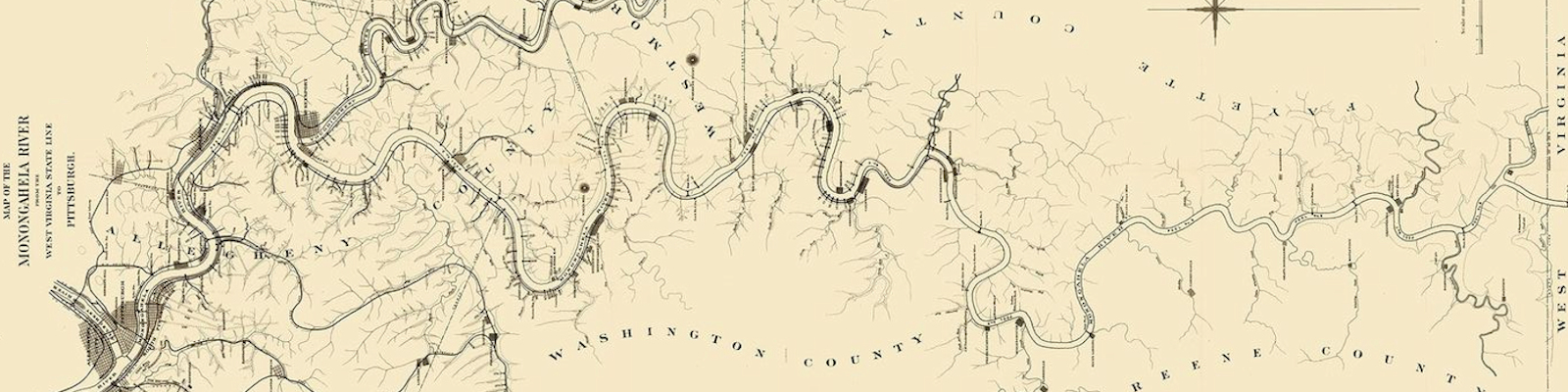
The Monongahela style of rye whiskey began some time shortly after the year 1795 along the Monongahela river of western Pennsylvania and the border region of north-western Virginia (now West Virginia). With the surplus of rye grain that was quickly available, all-rye whiskey was distilled there. By the middle of nineteenth century, Monongahela whiskey was advertised as being "pure-rye" or "all-rye" as an indicator of quality.
Normal full-sized pot-still production of whiskey using an all-rye mash was a messy business before the days of added enzymes, forcing the distiller to deal with the sticky sludge that would be created and that could physically block production. Tools were developed to help distillers clear it. I wonder if the "krobar" brand is recalling such.
The development of the three-chamber still in the first half of the nineteenth century effectively managed the sticky mess of all-rye whiskey distillation. The three-chamber still was quickly adopted by distillers in the Monongahela region, becoming common there by about the year 1830. The Leopold Brothers have brought this type of still back into use.
From the establishment of the terroir making for the rise of Monongahela whiskey after the year 1795, through the expectation that it be made of an all-rye mash by 1823, to it being shipped as far away as Napa, California by 1885, less than a century had passed.
* When using Amazon links from this site, a very small fraction might be paid to Elemental Mixology without affecting the purchase price.