
Fac Potiones Excellens
Tipples → Mixed Drinks → Slings → Cocktails → Plain Cocktails
Sazerac Cocktail
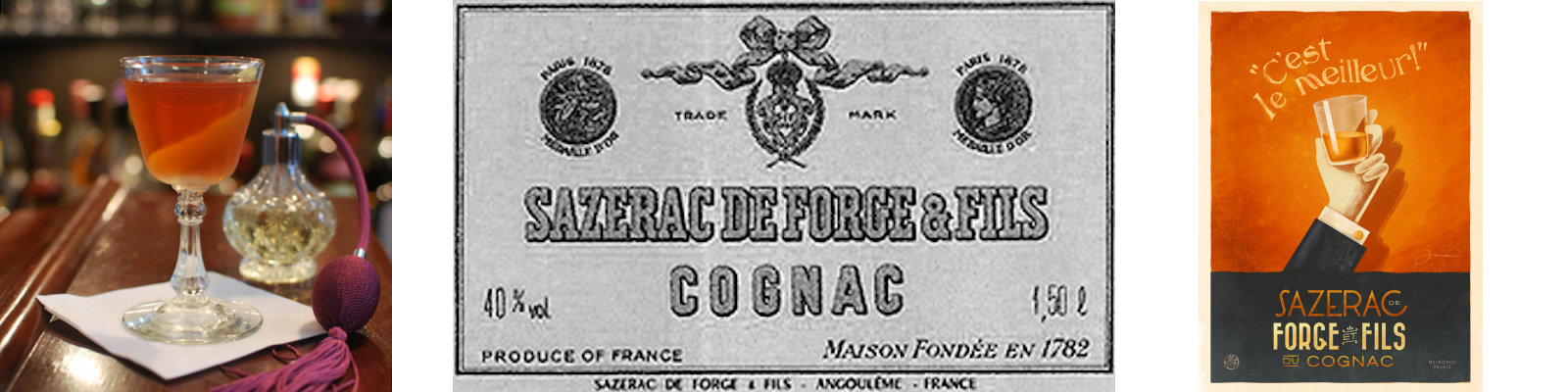

 :
:
- The World's Drinks. San Francisco; William Boothby, 1908
The Sazerac Cocktail is the Queue de Chantecler Cocktail made specifically with Sazerac Cognac brandywine. By 1895-1900, that brand had become very difficult to obtain because of the French wine blight.
For the more common, and probably better, similar drink based on rye whiskey, see the Zazarack Cocktail.
Have the folowwing items:
Service-ware
- 4½ fl-oz. glass Cocktail goblet
- 4-inch beverage napkin
Tools
- cuting board
- paring knife
- glass mixing pitcher*
(Yaraitm or similar) - jigger-and-pony measure
[2 fl-oz. by 1 fl-oz. / ~60 ml. by ~30 ml.] - 3-to-1 split pony
[¾ fl-oz. by ¼ fl-oz. / ~22.5 ml. by ~7.5 ml.] - food grade perfume atomizer
- ice scoop
- stirrer
(stainless-steel chopstick* - or long, narrow spoon) - Hawthorne strainer
Ingredients
- lemon (whole, for zest-cutting)
(Citrus limon: Eureka or Santa Theresa) - Peychaud's™ Bitters1
- 50° Brix simple syrup
- Sazerac™ Cognac brandywine
- esprit d’absinthe
[preferably in an ‘atomizer’] - method ice (also called 'cracked ice')
(half the size of service ice)
Instructions
- Chill the cocktail goblet.
- Cut a ~1” wide and ~3” long strip of lemon zest with minimal pith and reserve it.
- Set the mixing pitcher in the work area. Into it goes:
 • gentian bitters — 2 dashes
[1 scruplespoonfull / ¼ tsp. / ~1.25 ml.] • simple syrup — ¼ ponyfull
[¼ fl-oz. / ~7.5 ml.] • Sazerac™ Cognac brandywine — 1 jiggerfull
[2 poniesfull / 2 fl-oz. / ~60 ml.]- Set the chilled, empty goblet in the work area. Into it goes:
- • esprit d’absinthe — 2 or 3 ‘atomizer’ sprays
[or a little bit ‘rinsed’ around the inside and then discarded] - Take the mixing pitcher to the ice. Into it is added:
 • method ice — ⅔ fill
- Set the mixing pitcher back in the work area.
- Smoothly stir the ingredients for at least thirty seconds to mix and chill-dilute without letting aeration bruise the velvet of the liquor.
- Fit the Hawthorne strainer into the mixing pitcher and strain the drink through the strainer into the goblet.
- Garnish the drink with:
- • lemon zest (reserved in step #2) — 1 strip
(twisted zest-side-down over the drink, rubbed on the rim, and put into the drink). - Serve the drink on the napkin.
1 The 1908 source specifies Selner's™ bitters, but Peychaud's™ bitters is regularly used.
* When using Amazon links from this site, a very small fraction might be paid to Elemental Mixology without affecting the purchase price.